 App Developer

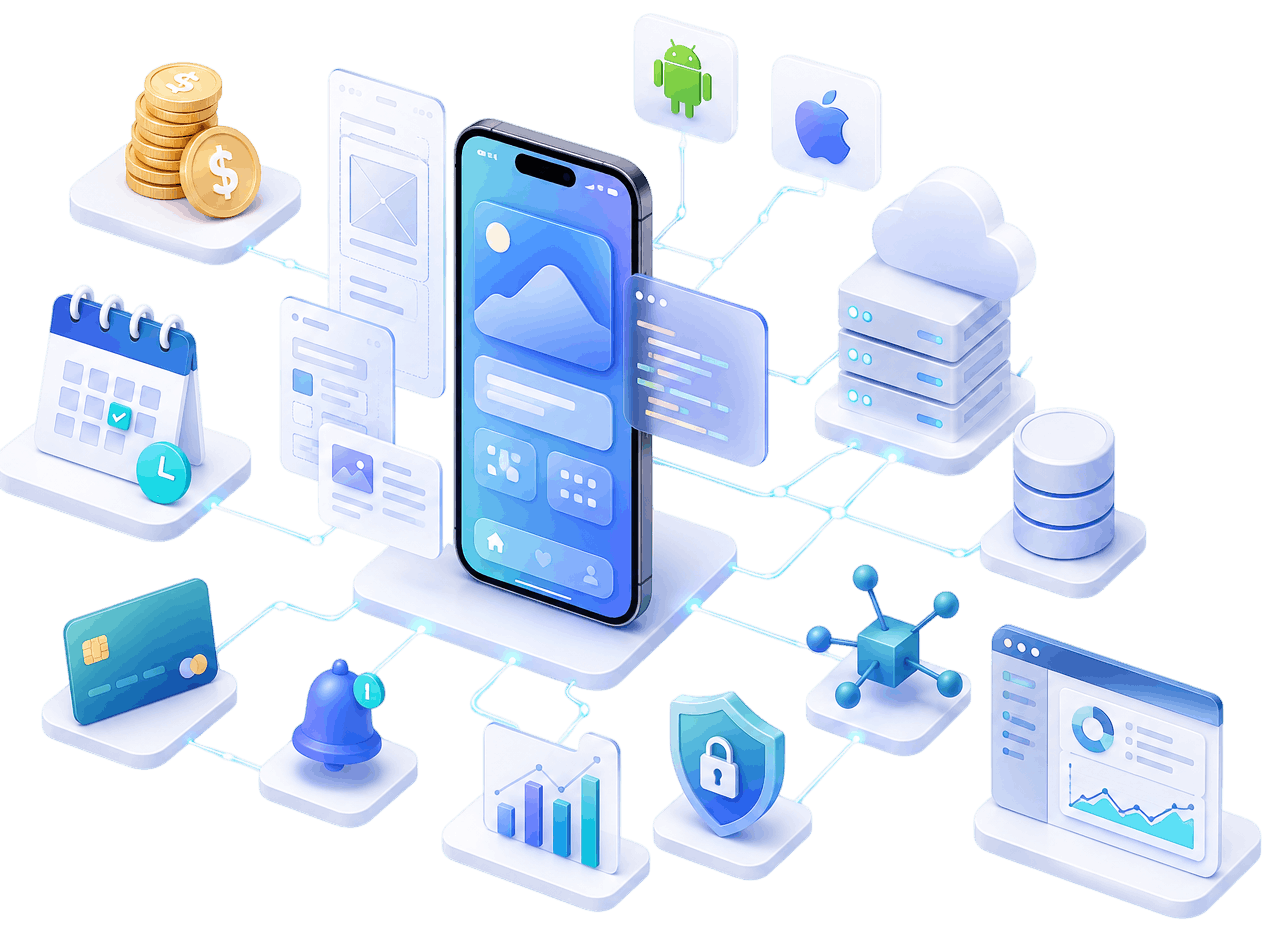
How to monetize an app, in one sentence: give people a genuinely useful free experience, then charge a committed subset of users for the upgrades, access, or convenience they actually want — through subscriptions, in-app purchases, a freemium tier, advertising, or a hybrid of several models. The download stays free; the revenue comes from designing paid value that a portion of your users are happy to buy.
That is the short answer. The real answer is a repeatable process, and that is what this guide covers. Below you will find a step-by-step framework for how to monetize an app in 2026 — from working out what your users will pay for, to picking a monetization model, setting pricing, building the paywall, and growing revenue after launch. Whether you are a solo founder shipping your first app or a team scaling an existing one, the same nine steps apply.
What does it actually mean to monetize an app?
To monetize an app simply means to turn its usage into revenue. That revenue can come from the users themselves (subscriptions, in-app purchases, paid downloads), from advertisers who want the users' attention, or from partners who pay to reach your audience. App monetization is the practice of choosing and combining those revenue streams so the app pays for itself — and then some.
Here is the counter-intuitive part: charging for the download is usually the worst way to monetize an app. A price tag on the store page is the single biggest barrier to someone trying your product, and it caps your audience at the tiny group willing to pay before they have experienced anything. That is why in-app purchases alone account for close to half of all app-store revenue, and why the highest-grossing apps are almost always free to install. Learning how to monetize an app well is really about learning how to earn after the install, not before it.
How to monetize an app in 9 steps
The fastest way to think about monetization is as a sequence, not a single decision. Skip a step and revenue tends to leak; follow them in order and each one makes the next easier. Here is the exact process we use to take an app from "free with no plan" to "free with a revenue engine."
Step 1: Understand who your users are and what they will pay for
Before you pick a model, you need to know which moments in your app create enough value that someone would open their wallet. Talk to real users, watch where they get stuck, and look for the point where the free experience stops being enough. The feature people beg for, the limit they keep hitting, the outcome they are chasing — that is what you will eventually charge for. Monetization that ignores this step almost always prices the wrong thing.
Step 2: Choose the right monetization model
Now match that value to a model. High-frequency apps with ongoing value lean toward subscriptions; games and creative tools lean toward in-app purchases; broad utilities with a small group of power users lean toward freemium. Do not try to run five models at once on day one — pick the single model that best fits your core use case, and commit to doing it well. (The full breakdown of every model, and which app type it suits, is in the two sections below.)
Step 3: Set a pricing strategy you can defend
Pricing is where most teams leave money on the table — usually by charging too little out of fear. Anchor your price to the value delivered and to what comparable apps charge, not to a number that "feels safe." Offer an annual plan alongside monthly to lift lifetime value, and remember that a 10% improvement in conversion or price can lift revenue by 20% or more once it compounds across every future customer. Price is a lever you will keep pulling, so start deliberately rather than randomly.
Step 4: Build a frictionless paywall and payment flow
The paywall is the screen that asks for money, and its design has an outsized effect on revenue. Use the native in-app purchase and subscription tools from Apple and Google so payment feels safe and takes one tap. Make the offer legible in three seconds — what you get, what it costs, how to start. Every extra field, unclear price, or confusing plan is a place where paying users quietly drop off.
Step 5: Design onboarding that leads to the first payment
The journey from install to first payment is won or lost in the first session. Good onboarding gets a user to a real "aha" moment fast, then presents the upgrade while the value is still fresh. Show the paywall after someone has felt the benefit, not before — a prompt that arrives too early reads as a toll booth, while the same prompt right after a win reads as a natural next step.
Step 6: Launch a monetization MVP — do not wait for perfect
You do not need ten payment options to start earning. Ship one clear upgrade path — a single subscription or one meaningful in-app purchase — and get it in front of real users. A live, simple monetization MVP teaches you more in two weeks than months of planning, because you finally see what people actually buy instead of what you assumed they would.
Step 7: Track the metrics that actually predict revenue
Once money is flowing, monetization becomes a measurement game. Watch conversion rate, average revenue per user (ARPU), churn, and the ratio of lifetime value to acquisition cost. These numbers turn "I hope this works" into "I know exactly which lever to pull next." We break down each metric — and the benchmarks to aim for — further down this guide.
Step 8: Optimize your paywall, pricing, and trials
Optimization is the highest-leverage work in app monetization because it improves revenue without adding features. Test where the paywall appears, how the price is framed, whether a free trial helps or hurts, and how annual-versus-monthly is presented. Change one variable at a time, give each test enough users to be meaningful, and keep what wins. Small, compounding gains here often beat a big new feature.
Step 9: Go hybrid — layer in a second revenue stream
Once your first model is proven, capture the users it misses. A subscription app can add one-off in-app purchases; a freemium app can add light advertising for people who will never upgrade. This is how the top-grossing apps operate — most combine two or three models so every type of user contributes revenue in the way that suits them. Layering a second stream onto a proven first one is the safest way to grow the total.
The main app monetization models explained
There is no single best way to monetize an app — only the model that best fits your product, your audience, and how often people come back. Here are the nine models that generate the overwhelming majority of app revenue today, with the strengths and trade-offs of each.
1. In-app purchases
In-app purchases (IAP) let users buy specific items or unlocks inside an otherwise free app — consumables that get used up (coins, credits, lives), non-consumables bought once and kept (a pro unlock, a removed watermark), or unlockable content like new levels and templates. IAPs are the backbone of monetization in gaming and work well anywhere there is a repeatable reason to spend at the exact moment a user's motivation is highest.
2. Subscriptions
Subscriptions charge a recurring weekly, monthly, or yearly fee for ongoing access to premium features or content. Because the revenue repeats, subscriptions produce the most predictable and highest lifetime value of any model, which is why they dominate the top-grossing charts in productivity, health, finance, learning, and streaming. The catch: users must feel they get more value each period than they pay, or they churn.
3. Freemium
The freemium model pairs a genuinely useful free tier with a paid tier that unlocks advanced capabilities. The free product attracts users and doubles as marketing; the premium tier monetizes the smaller group who hit its limits. The craft is in drawing the line: too generous and nobody upgrades, too stingy and nobody stays long enough to convert. Freemium free-to-paid conversion of even 2–5% can be very healthy at scale.
4. In-app advertising
Advertising earns revenue from users' attention rather than their wallets — banner, interstitial, native, and rewarded video ads. It monetizes the large share of users who will never pay, which makes it a strong fit for high-traffic, casual apps. The trade-off is experience: too many ads erode retention, so the best implementations use rewarded formats that give users something in exchange for watching.
5. Paid downloads
The oldest model: charge a one-time fee to download the app. It still works in narrow niches — professional or specialist tools with an obvious, immediate payoff — but it caps your audience at people willing to pay sight unseen. With over 95% of apps free to install, paid downloads are the exception, not the strategy most apps should reach for first.
6. Affiliate marketing and partnerships
Affiliate revenue earns a commission when users buy a recommended third-party product or service. It fits apps that naturally sit near a purchase decision — a travel app suggesting hotels, a fitness app recommending gear, a finance app comparing cards. It adds a revenue stream with none of the cost of building physical goods, but only works if the recommendations genuinely help rather than interrupt.
7. Sponsorships and brand deals
Instead of programmatic ads, some apps sell direct sponsorships — a brand pays to reach the app's audience through featured placements, sponsored content, or bundled offers. This pays far more per user than banner ads for apps with a tightly defined, valuable niche, because the audience is exactly who a partner wants to reach. It is less automated than ads, but it protects the experience.
8. Selling digital or physical goods
Many apps monetize by selling goods directly — digital products like templates, presets, and courses, or physical products shipped to the user. Commerce turns attention into revenue without depending on subscriptions or ads. It is a huge share of the app economy: Apple has reported that physical goods and services sold through apps account for the large majority of total App Store ecosystem billings, which have passed a trillion dollars.
9. Hybrid monetization
Hybrid is how the biggest apps actually make money: they blend several models so every type of user contributes. Industry data shows a large share of top apps combine subscriptions with consumables or lifetime purchases — adoption of hybrid models runs well over 60% in gaming and around 40% in social and lifestyle apps. A hybrid stack — free tier with light ads, a subscription for committed users, and in-app purchases for one-off needs — builds a revenue base that is both larger and more resilient than any single stream.
How to choose the right monetization model for your app
With nine options on the table, the choice can feel overwhelming. In practice it comes down to three questions: how often do people use the app, how strong is the ongoing problem it solves, and how naturally does a purchase moment fit the experience? Match your answers to the guide below and the right model usually becomes obvious.
- High-frequency, ongoing value (fitness, productivity, learning) → subscriptions
- Repeatable, in-the-moment spending (games, creative tools) → in-app purchases
- A broad free audience with a small group of power users → freemium
- High traffic but low willingness to pay (casual, content, news) → advertising
- A clear purchase decision nearby (travel, finance, shopping) → affiliate or commerce
- A tightly defined, valuable community → sponsorships and partnerships
- A specialist tool with an obvious payoff → a paid download or one-time unlock
Most teams should not stop at one. Launch with the single model that best fits your core use case, prove that users will pay, and only then layer in a second or third stream. Trying to monetize five ways on day one confuses users and slows the product down; sticking to one way for years leaves money on the table that a hybrid approach would have captured.
How to monetize an app without ads
Plenty of founders assume advertising is the only way a free app can earn — it is not, and for many apps it is the wrong first choice. To monetize an app without ads, you deliver real value first and then charge for a premium layer that a portion of users genuinely want. The tools are subscriptions, in-app purchases, freemium upgrades, one-time unlocks, and even donations or tip jars. Because these tie revenue directly to the value a user receives, they usually produce higher lifetime value and a cleaner experience than filling the screen with banners.
Ad-free monetization is especially powerful for indie and niche apps. A small, loyal audience that pays a few dollars a month can out-earn a much larger audience monetized with ads — the classic "1,000 true fans" math, where a thousand people paying a modest recurring fee funds a sustainable product. If your app solves a specific, valuable problem for a defined audience, skipping ads and charging for premium value is often the faster route to real revenue.
The metrics that decide whether your app makes money
Whichever model you choose, the same handful of numbers determine whether the app actually makes money at scale. Tracking them turns monetization from a guess into a system you can measure and improve week over week.
- Conversion rate — the share of users who move from free to paying (2–5% is healthy for many freemium and trial apps)
- Average revenue per user (ARPU) — total revenue divided by all active users
- Average revenue per paying user (ARPPU) — revenue divided by paying users only
- Churn rate — how many subscribers cancel or lapse each month (under 5% monthly is a common healthy target)
- Lifetime value (LTV) — total revenue a user generates over their time in the app
- Customer acquisition cost (CAC) — what it costs to acquire each paying user
The relationship between LTV and CAC is the single most important number in app monetization. A widely used benchmark is an LTV at least three times your CAC. If it costs more to acquire a user than that user will ever pay back, no amount of downloads makes the app profitable — growth just accelerates the losses. When LTV comfortably clears CAC, though, every dollar spent on acquisition returns more than a dollar, and scaling growth becomes one of the safest investments a team can make.
Common app monetization mistakes to avoid
Most apps that fail to monetize are not undone by the wrong model — they are undone by a handful of avoidable mistakes in how that model was implemented. Watching for these keeps revenue from leaking:
- Showing the paywall before users have felt any real value
- Charging too little out of fear instead of pricing to the value delivered
- Making the free tier so generous that almost nobody needs to upgrade
- Making the free tier so limited that nobody stays long enough to convert
- Pricing on gut feeling instead of testing against comparable apps
- Ignoring churn until it quietly erases new subscriber growth
- Adding a second monetization model before the first one is proven
Every one of these is fixable, and none requires rebuilding the app. Most come down to sequencing: show value, then ask for payment; prove one stream, then add another; measure churn as closely as sign-ups. Teams that treat monetization as an ongoing discipline reliably out-earn teams that set a price once and forget it.
How long does it take to monetize an app?
There is no universal timeline, but a realistic pattern shows up again and again. In the first one to three months, the priority is proving that people use the app and come back — revenue at this stage is usually small, and that is fine, because the free experience is still being tuned. Between months three and six, teams that have validated retention start testing paywalls, pricing, and their first premium tier, and this is typically when meaningful revenue first appears.
From six months on, the focus shifts to scaling what already converts: sharpening app store optimization so high-intent users find the app, expanding the premium feature set, and cutting churn so subscription revenue compounds. Apps that reach sustainable revenue in under a year almost always share one trait — they nailed retention before they pushed hard on monetization, because no paywall can save an app people stop opening after the first week.
How App Developer helps you monetize your app
Knowing how to monetize an app is one thing; shipping an app that actually earns is another. At App Developer, we build monetization into products from the first line of code, so revenue is never something you try to retrofit after launch. Here is how we help teams turn a promising idea into an app that pays for itself.
1. Choose and validate the right monetization model
Not every app should be a subscription, and not every app should sell in-app purchases. We match your product, audience, and category to the model most likely to work — subscriptions, freemium, in-app purchases, commerce, or a hybrid — and validate that choice against how comparable apps monetize before we build. Getting the model right early saves months of expensive rework later.
2. Build a premium experience users actually pay for
Revenue lives in the gap between free and premium. We design that gap deliberately: a free tier that delivers immediate value and a premium tier worth paying for, with paywalls placed exactly where users feel the most value. Clean iOS and Android architecture means new subscriptions, tiers, and in-app purchases can ship fast as your product grows.
3. Optimize conversions, pricing, and retention
Monetizing an app is a conversion problem as much as a product one. We optimize onboarding, paywall timing, pricing presentation, and free-trial flows so more users become paying customers — and we build the retention features that keep subscriptions alive month after month. Small gains in conversion and churn compound into a much larger revenue base over time.
4. Connect acquisition, engagement, and revenue
An app only makes money with a steady flow of the right users. We wire user acquisition — including app store optimization to attract high-intent users — to in-app analytics, so you can see which channels bring people who actually pay. When acquisition, engagement, and revenue are connected, you can invest confidently in the growth that drives real revenue instead of guessing.
Frequently asked questions
How do you monetize an app for free to download?
You monetize a free app after the install, not before it. Give users a genuinely useful free experience, then earn through subscriptions, in-app purchases, freemium upgrades, advertising, affiliate revenue, or selling goods. Most free apps combine two or three of these so casual users, committed users, and occasional buyers each contribute revenue in the way that suits them.
What is the best way to monetize an app?
There is no single best way — the right model depends on how often people use the app and how strong a problem it solves. As a rule of thumb, apps with ongoing value do best with subscriptions, games and creative tools with in-app purchases, broad utilities with freemium, and high-traffic casual apps with advertising. The very best-earning apps usually combine several models into a hybrid.
How much money can an app make?
It varies enormously. A small indie app might earn a few hundred dollars a month, while a top-grossing subscription app can make millions. Apple has reported that the App Store ecosystem generates well over a trillion dollars in billings and sales, the large majority from free-to-download apps. The difference comes down to the monetization model, retention, and the value delivered to users.
How do you monetize an app without ads?
Skip advertising and charge for premium value instead — subscriptions, in-app purchases, freemium upgrades, one-time unlocks, or donations. These tie revenue to the value a user receives, which usually produces higher lifetime value and a cleaner experience. It is especially effective for niche and indie apps, where a small, loyal audience paying a recurring fee can fund a sustainable product.
How do you monetize an app as a beginner?
Start simple. Build a free core experience that delivers obvious value, add one clear premium upgrade — a subscription or a single in-app purchase — and place the paywall only after users have felt that value. Then bring in high-intent users through app store optimization and word of mouth. One well-designed upgrade path will make more money than a dozen half-finished ones.
The bottom line
So, how do you monetize an app? You give value first and charge for the upgrades a committed group of users genuinely wants — through subscriptions, in-app purchases, freemium tiers, paywalls, ads, commerce, and smart combinations of all of them. The download stays free; the revenue comes from designing premium value people are happy to pay for, then optimizing it step by step.
The apps that win are not the ones with the cleverest single trick. They pair a clear monetization model with a steady flow of the right high-intent users and a product that keeps earning its place in someone's life. Follow the nine steps, pick the model that fits, measure what matters, and "how to monetize an app" stops being a question and becomes a system you can build, measure, and grow.