Mobile App Developer For Hire — Pricing
The Real Cost of Hiring an App Developer
Real starting prices per service, what sits inside each one, and an honest account of what pushes a figure up. Whether you want a mobile app developer for hire on a single build or an app developer for hire across a whole product, you will leave this page able to sanity check any quote you receive, including mine.
- Quotes, not guesses
- Fixed
- Payment milestones
- 4
- Hidden line items
- 0
- Quote turnaround
- 24h

Side by side
The cost of an app developer, service by service
Real ranges from work I have actually delivered, with what sits inside each one. The low end is a focused build with a clear scope; the high end is the same service with more screens, more integrations and more of the things listed further down this page. Your own number lands somewhere on that line after a scoping call, and it is fixed from that point.
Get a custom estimate-
Landing & marketing site
Up to 8 designed pages with a content panel
- Typical range
- $300 – $500
- Timeline
- 2 – 3 weeks
What is included
- Figma design before any code
- Admin panel for pages and blog
- Technical SEO and schema markup
- Contact and newsletter forms
- Analytics and Search Console setup
- 30 days of post launch fixes
-
Business website & dashboard
Customer portal or internal admin tool
- Typical range
- $500 – $2,000
- Timeline
- 4 – 7 weeks
What is included
- Laravel backend with Vue or React
- Accounts, roles and permissions
- Data tables, filters and exports
- Staging environment for review
- Automated tests on business logic
- 45 days of post launch fixes
-
Mobile app — one platform
iOS or Android, launched to one store
- Typical range
- $800 – $5,000
- Timeline
- 5 – 9 weeks
What is included
- Flutter or native Kotlin build
- Laravel API and admin panel
- Auth, push notifications, analytics
- Offline handling and crash reporting
- Store submission and review handling
- 60 days of post launch fixes
-
Mobile app — both stores
One codebase shipped to iOS and Android
- Typical range
- $800 – $10,000
- Timeline
- 8 – 14 weeks
What is included
- Everything in the single platform build
- App Store and Play Store release
- Device testing across both platforms
- Two release pipelines and signing keys
- Privacy and data safety declarations
- 60 days of post launch fixes
-
Product platform
App, web and backend with payments
- Typical range
- $800 – $7,200
- Timeline
- 12 – 20 weeks
What is included
- Everything in the two store build
- Payments, subscriptions and invoicing
- Role based access across web and app
- Webhooks and third party integrations
- Monitoring, backups and staging
- 90 days of post launch fixes
-
Maintenance & support
An app developer on call for a live product
- Typical range
- $80 – $500 / month
- Timeline
- Monthly, cancel anytime
What is included
- SDK, OS and dependency updates
- Crash monitoring with fixes
- A reserved block of days each month
- Small feature work and improvements
- Written monthly summary
- Priority response within 24 hours
All figures are in USD and exclude your own hosting, store developer accounts and third party service fees. Every project is quoted at one fixed price after a scoping call, split into milestones you approve as they land.
How the quote is made
Where does your number come from?
It starts with a conversation, not a form. We go through what the app has to do on day one, who it is for and what can wait until version two, because that single distinction moves the cost of an app more than any framework choice ever will. Nobody can quote a product they have not heard described, and any app developer for hire who tries is either padding the number heavily or planning to renegotiate it later.
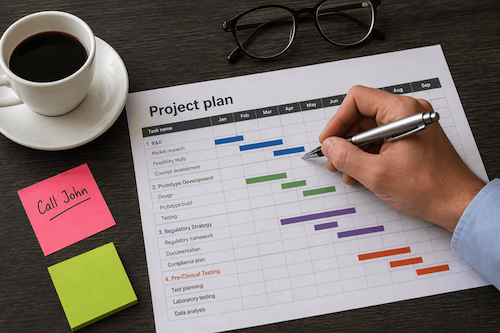
From that call I write the scope down: the screens, the integrations, the platforms and everything explicitly not included. Each item gets estimated against work I have actually delivered rather than a feeling, and the pieces that depend on systems I do not control are flagged as ranges until I have seen their documentation. The total is then split into four milestones you approve as they land.
What you receive is one number and the scope it belongs to, both in writing, and both yours to keep whether you hire me or not. If the estimate turns out to be wrong inside that scope, that is my problem rather than yours — which is precisely why the scoping conversation is thorough rather than a formality.
Where the money goes
Six things that actually move the number
Every quote you receive is really these six questions answered. Read them once and you can cut the right things instead of the cheap looking ones, which is the difference between a smaller bill and a worse product.
-
01
The number of screens, not the number of features
Feature lists lie. Ten features that share four screens cost far less than four features spread across twenty, because the screen is the unit that actually gets built. Every one of them needs a design, an empty state, an error state, a loading state, a permission case and a test, and none of that appears on the bullet point that describes it. This is also why "just add a small screen for X" is rarely small: the screen itself might take a morning, but the states around it take the rest of the week. When you want to reduce a quote, look for screens two features can share rather than features to delete outright — you usually keep the capability and lose the cost.
-
02
One platform or two
A single Flutter codebase covers both stores, so the cost of the second platform is nowhere near double. What it does add is real: two review processes with different rules, two sets of device quirks, two release pipelines, two sets of store screenshots, and testing on hardware that behaves differently. In practice a second platform adds roughly a fifth to the total. If your users are overwhelmingly on one platform — and the analytics on your website usually answers that — launching there first and adding the second after you have learned something is the single easiest saving on this page, and it costs you nothing structurally because the codebase already supports both.
-
03
Whether money moves through it
Anything touching payments, subscriptions or payouts carries a testing burden that display-only screens never do. The happy path is the easy part. What takes the time is everything around it: declined cards, expired cards, partial refunds, currency handling, failed webhooks arriving twice, subscriptions that lapse mid-cycle, and disputes that need a paper trail. Each of those is a state your app has to handle correctly, because getting one wrong costs real money and real trust rather than causing a cosmetic glitch. On a small budget this is the single largest multiplier, and it is the last place worth economising.
-
04
How much design already exists
A finished Figma file with agreed states can cut weeks off a build, because every decision it contains is a decision that will not be made mid-sprint with a developer waiting. A rough sketch means design happens inside the project instead, which is often the better outcome for the product — but it needs to be in the estimate rather than discovered in week three. The expensive middle ground is a design that looks complete but only covers the ideal case: no empty lists, no long names, no error messages, no small screens. Those gaps get found during the build and each one pauses it.
-
05
Integrations you do not control
Your own API is predictable, because if it is wrong I can fix it. A legacy ERP, an old booking system, a shipping provider or a bank sandbox is not: the documentation may be out of date, the test environment may behave differently from production, and the support channel may be an email address that answers in a week. Anything depending on a system I cannot change gets estimated as a range rather than a number, and the range narrows as soon as I have seen the real documentation and made one successful call against it. That is usually worth doing before the rest of the project is priced.
-
06
The quiet items most quotes skip
Store developer accounts, signing keys, push certificates, privacy and data-safety declarations, crash reporting, analytics, an admin panel so you can change your own content, hosting, backups, and the handover documentation. None of it is expensive on its own and none of it is optional, which is exactly why leaving it out makes a quote look competitive. It is the most common way a project ends up over budget halfway through: the build was estimated honestly and everything around the build was not. If you are comparing app developers for hire, this is the list to check line by line.
Optional extras
Add ons, priced openly
None of these are required and none are quietly bundled into a quote to inflate it. Each one is a separate line you can take or leave, and the cost of adding any of them later is always higher than doing it during the build.
-
Brand and identity
from $250
A logo, a colour system that survives dark backgrounds, typography choices and a short brand sheet any future designer can follow. Most projects arrive with a logo and nothing else, which is how a product ends up with six shades of the same blue. This settles those decisions once so every screen after it stays consistent without anyone having to think about it.
-
Analytics and funnels
from $160
Event tracking built around the questions you actually need answered — where people abandon signup, which screen they never reach, what the paying users did differently — rather than a dashboard of page views nobody opens twice. You get the events defined, wired in and documented, so the numbers still make sense to whoever reads them in six months.
-
Extra language
from $140
Full localisation of the app and the admin panel, including right to left layout support, translated store listings and date, number and currency formatting that follows the locale. Adding a language later means revisiting every screen, so the cost of doing it during the build is a fraction of retrofitting it after launch.
-
Security review
from $280
A dedicated pass over authentication, permissions, stored data, dependencies and the API surface, ending in a written report with each finding ranked and a fix suggested. Worth booking before a launch that handles personal data, and reliably cheaper than the conversation that follows a leak.
-
Performance pass
from $200
Profiling on real mid-range devices and slow connections rather than a simulator on fast wifi, then fixing what the numbers point at: oversized images, unindexed queries, blocking requests, janky lists. You get before and after measurements so the improvement is a fact rather than a claim.
-
Team training
from $180
Recorded walkthrough sessions covering the architecture, the deployment process and the parts of the codebase that need explaining, plus written notes to go with them. The point is that your own developers can work confidently in the project without booking time with me every week.
How you pay
Four milestones, no surprises
Money follows delivered work. At no point are you paying for more than one stage ahead of what you have already seen and approved, which is the main protection you have when hiring an app developer you have not worked with before.
-
01
Deposit
30% of the total
Paid on signing. It covers discovery, the architecture decisions and the design phase, and it reserves your slot in the calendar so the work starts when we agreed rather than whenever a gap appears. Nothing before this point costs you anything.
-
02
Design signed off
20% of the total
Paid once every screen is agreed in Figma and you have clicked through the prototype yourself. Nothing gets built until you have seen what it will look like, because changing a screen in design takes an hour and changing it in code takes a day.
-
03
Core build
30% of the total
Paid when the main flows work end to end on a staging environment and you have used them on your own device. Not when they are described as done in an update, but when you have tried them and they behave the way the scope said they would.
-
04
Launch
20% of the total
Paid on release, after store approval and after handover of code, accounts and documentation. The post launch fix window starts here rather than at the last commit, so the time you spend waiting on review is not time subtracted from your support.
If a project stops early for any reason, you keep everything produced up to that point and any unearned portion of the deposit is returned. The full terms, including the cases where a refund does not apply, are written out on the refund policy page.
Read the refund policyWhat you are guaranteed
The parts that never change
-
Fixed quote in writing
The number in the proposal is the number you pay unless you ask for something that was not in the scope, and anything new is quoted and approved before a minute of work goes into it. If my estimate turns out to be wrong inside the agreed scope, that is my problem to absorb rather than a revised invoice for you to argue with.
-
A real refund policy
Milestone based payments mean you are never exposed by more than one stage of work, and any unearned portion of a deposit comes back if the project stops early. You also keep everything produced up to that point. The full terms, including where a refund does not apply, are written out rather than left vague.
-
You own everything
Code, design files, repositories, hosting, domains, signing keys and store accounts sit in your name from the first day rather than being transferred as a favour at the end. There is no licence, no lock-in and no situation where you need my permission to move your own product to another app developer.
-
No silent weeks
A written update every week covering what shipped, what is next and anything that has put a date at risk, plus a build you can install at the end of every sprint. Bad news arrives early, while it is still cheap to react to, instead of surfacing near a deadline when the options have run out.
Common questions
Questions about money
The questions that come up on almost every first call about budget, answered here so you do not have to ask them to find out. If something you need to know is missing, ask it directly — a straight answer costs nothing and takes about a minute.
-
How much does it cost to hire an app developer?
On this site, between $300 for a focused marketing site and $7,200 for a full product platform, with most mobile app projects landing between $800 and $5,000. The table above breaks that down per service. Where you sit inside a range depends on the six drivers listed further down, and after one scoping call the range becomes a single fixed number in writing.
-
Why do prices start "from" a number instead of being fixed?
Because a booking screen and a marketplace with live tracking are not the same job and should not carry the same invoice. The starting figures are real projects at their simplest end. After one call about your scope you get a fixed quote, and that quote does not move unless you change what you asked for.
-
What is the cost of building a mobile app from scratch?
A first release on one platform, built properly with an API, an admin panel, authentication, analytics and store submission handled, starts at $800 and usually finishes between there and $5,000. Shipping the same codebase to both stores adds roughly a fifth. Anything below that range is either a template with your logo on it or a quote that is missing the work around the build.
-
Do you charge hourly or by project?
Projects are quoted as a fixed price against a written scope, split into four milestones. Retainers are a monthly figure for a reserved block of time. Hourly billing exists only for small ad hoc jobs on systems I already know, because for anything larger it gives you the least certainty about the final cost.
-
What is the cost of running the app after launch?
Hosting, domain and store developer accounts are yours and typically run between $20 and $80 a month for a normal app, plus $99 a year for Apple and a one off $25 for Google. Maintenance with me is optional and runs from $80 a month for a reserved block of days. Doing nothing is also a valid choice for a while, but SDK and OS updates eventually force a release.
-
What is the cost of adding the second platform later?
Less than building it at the same time, in cash terms, but more in total. The codebase already supports both, so what you pay for is the second review process, the second signing setup, the device testing and the store assets. Launching on one platform first is a real strategy when your users are concentrated there, and it is the cheapest way to learn what version two should contain.
-
Is a freelance app developer for hire cheaper than an agency?
Usually, and the reason is structural rather than a discount. You are paying for the person doing the work instead of the account manager, the sales team and the office behind them. What you give up is bench depth, so ask any freelancer what happens if they are ill for a fortnight. The honest answer here is that timelines have slack built in and you are told the moment a date is at risk.
-
What if we need to change scope mid project?
Scope changes are normal and welcome. Anything new gets estimated and quoted before it is built, so you approve the extra cost in advance. Nothing is ever added to an invoice retroactively, and a change that removes work reduces the total the same way.
-
Can you work with a smaller budget than these figures?
Sometimes, by cutting scope rather than quality. A tighter first release with fewer screens is a real strategy and I will help you decide what to drop. What I will not do is agree to the full scope at a lower price and then take shortcuts nobody sees until the first month of maintenance.
-
Do you take equity instead of payment?
Rarely, and never as the whole fee. A partial equity arrangement can work when the cash portion still covers the cost of building it and I genuinely believe in the product, but it has to be a conversation about the product rather than a way to defer a bill.
-
How do payments work in practice?
Bank transfer or card, invoiced at each milestone with 7 day terms. Invoices are issued in USD by default, or in dirhams or euros if that suits your accounts better. Everything is properly documented, so your accountant gets a real invoice rather than a payment link and a thank you.
-
What happens if I am not happy with the work?
Raise it at the milestone rather than at the end. Every stage has a review point precisely so problems surface while they are still cheap to fix, and the refund policy sets out exactly where you stand if we cannot resolve it. You keep everything produced up to that point either way.
App Developer For Hire — Available Now
Get a Real Number Before You Hire an App Developer
Consulting-$20
Before you commit to anything, we talk. Thirty minutes costs $20 — enough to keep the calendar honest, small enough that it is never the reason you hesitate. I scope your idea, tell you honestly what it takes to build and what the cost of building it should be, and hand you a plan you can act on, with me or without me. No retainer, no sales script. Most people arrive with a feature list twice the size of what they need for a first release, and the fastest way to save money is to find that out before a single line of code is written. You get my read on the scope, the realistic timeline, the platform choice, and the parts that quietly cost the most to build. If we go on to work together, the $20 comes off your first invoice.
Book a 30-minute call for $20- Share Your Vision
- Book a 30-Minute Call
- Leave With a Plan
-
Send the idea, a rough feature list and the deadline you are working to. A few sentences is enough to start — there is no brief to fill in and no form to fight with.

-
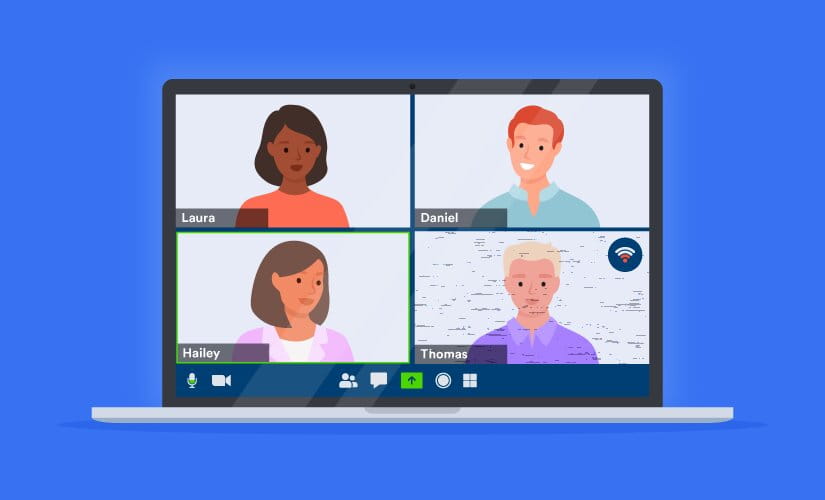
Consulting is $20 per 30 minutes, booked within 24 hours. In that half hour I walk you through what your app actually needs, what the cost of building it comes to, and which features are safe to cut from version one.
-
You leave with a written scope and a fixed quote that is yours to keep, whether you hire me or not. If we do work together, the $20 comes off your first invoice.