 App Developer

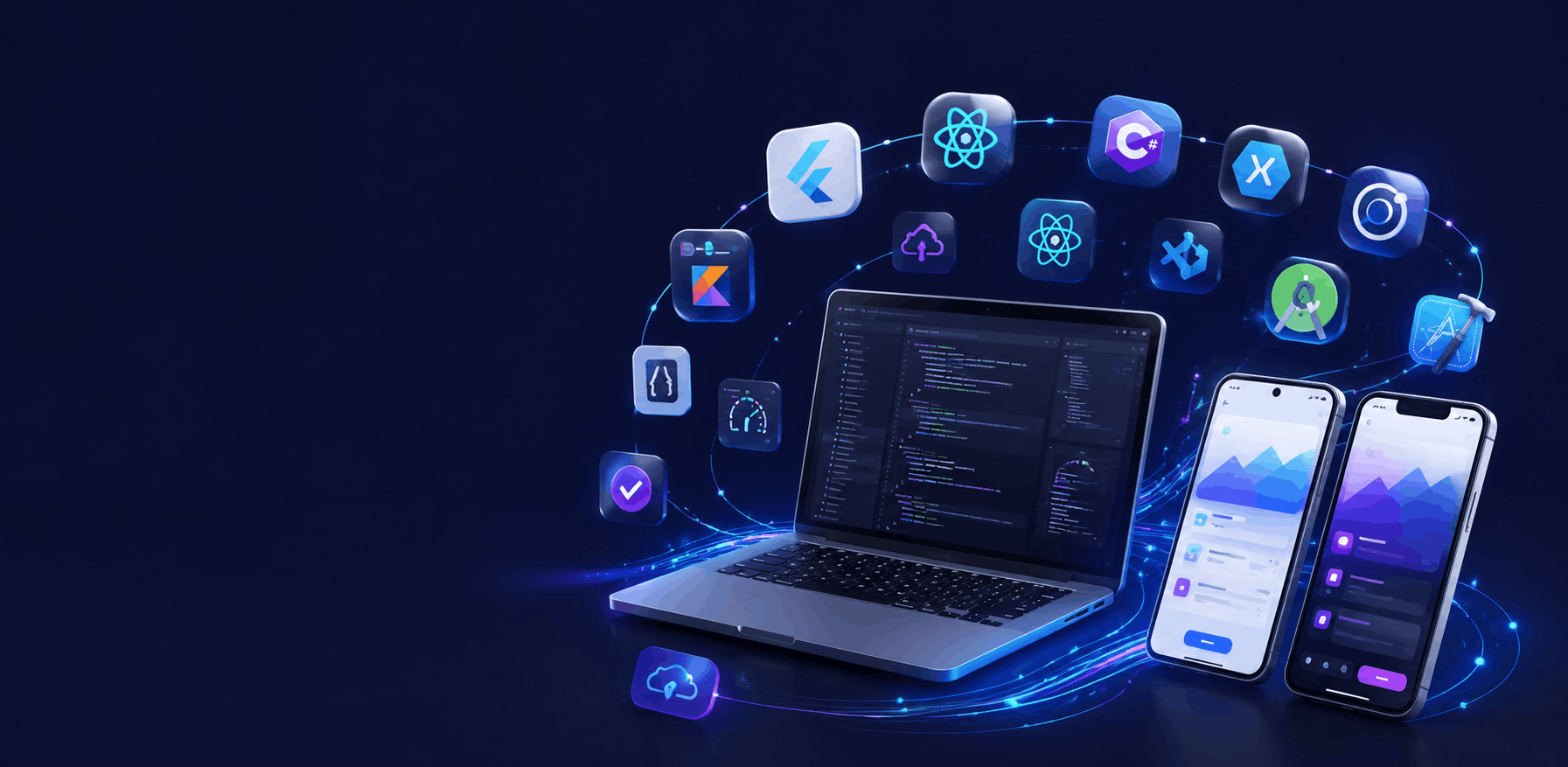
Cross-platform app development is the practice of building a mobile app once and running it on both iOS and Android — and often the web and desktop too — from a single shared codebase. Instead of writing a separate native app for every operating system, teams reach for modern mobile development tools like Flutter, React Native, and Kotlin Multiplatform to ship faster and spend less. In 2026, cross-platform app development has become the default choice for startups and enterprises that want to reach every user without doubling their budget.
This guide explains what cross-platform app development is, why so many teams choose it, and which mobile development tools lead the market this year. Whether you call it cross-platform or multi platform mobile application development, the goal is the same: write once, deploy everywhere, and maintain one codebase instead of many.
What is cross-platform app development?
Cross-platform app development is a way of writing software that runs on multiple operating systems — Android, iOS, Windows, and the web — without coding a separate version for each one. The apps are built on a shared codebase, so a single team can maintain one project instead of several. This is the same idea people mean when they talk about multi platform mobile application development: one build, many platforms, following the classic "write once, run anywhere" principle.
The opposite approach is native development, where you build a dedicated app for each platform using that platform's own language. Native apps can squeeze out maximum performance, but multi platform mobile application development wins on cost, speed, and consistency — which is exactly why the right mobile development tools have made cross-platform the mainstream choice.
Why choose cross-platform app development?
The appeal of cross-platform app development comes down to reach and efficiency. Because you share one codebase across every platform, you save money, ship sooner, and keep the experience consistent everywhere. The biggest benefits:
- Lower cost — a single codebase can reduce development spend by 50–80% compared with building two native apps.
- Faster delivery — teams report 30–40% quicker development cycles with modern mobile development tools.
- Wider reach — launch on iOS and Android at the same time and cover every user from day one.
- Easier maintenance — fix a bug or ship a feature once, and it lands on every platform together.
- Code reuse — shared logic and UI components mean far less repeated work across the project.
The best mobile development tools for cross-platform app development in 2026
Dozens of frameworks exist, but a handful of mobile development tools dominate real-world cross-platform app development. These are the leaders to know this year:
Flutter
Flutter, Google's UI toolkit built on the Dart language, is the market leader with roughly 46% adoption among mobile developers. It renders its own pixel-perfect widgets, offers instant hot reload, and is ideal for custom designs and rapid MVPs — the go-to choice for many cross-platform app development teams.
React Native
React Native, backed by Meta, lets JavaScript and TypeScript developers build native mobile apps and is used by around 42% of developers. It reuses existing web skills and taps a massive ecosystem, making it one of the most practical mobile development tools for teams that already know React.
Kotlin Multiplatform
Kotlin Multiplatform (KMP) shares business logic across platforms while letting you build each interface with native UI tools. Endorsed by Google and used by companies like Duolingo, Forbes, and McDonald's, it is a strong fit for multi platform mobile application development where a native feel matters most.
.NET MAUI
Microsoft's .NET MAUI uses C# and XAML to target Android, iOS, macOS, and Windows from one project. For teams already inside the Microsoft ecosystem — or migrating from Xamarin — it is among the most natural mobile development tools to adopt.
Ionic
Ionic builds apps with familiar web technologies — HTML, CSS, and JavaScript — and suits teams bridging an existing web app into mobile. It is a lightweight entry point into cross-platform app development for web-first companies.
Cross-platform vs. multi-platform vs. native
The terms overlap, so it helps to be clear. Cross-platform app development and multi platform mobile application development describe the same thing: one codebase serving many platforms. Native development means a separate build per platform. In practice, the best mobile development tools now deliver near-native performance, so the old trade-off between reach and quality is far smaller than it used to be.
How to choose the right mobile development tools
No single framework is best for every project. When you compare mobile development tools for cross-platform app development, weigh these factors:
- Your team's existing skills — JavaScript points to React Native, C# to .NET MAUI, and Dart to Flutter.
- Performance needs — graphics-heavy apps favour Flutter or a native-UI approach like Kotlin Multiplatform.
- Platform coverage — decide whether you need web and desktop as well as mobile.
- Community and plugins — larger ecosystems mean faster problem-solving and more ready-made features.
- Long-term support — pick a framework with strong backing so your multi platform mobile application development stays maintainable.
Frequently asked questions
Is cross-platform better than native app development?
For most projects, yes. Cross-platform app development delivers most of native's performance at a fraction of the cost and time, thanks to today's mature mobile development tools. Native still wins for the most demanding games or hardware-heavy apps, but multi platform mobile application development is the right default for the majority of business apps.
Which mobile development tools are best for beginners?
Flutter and React Native are the friendliest starting points. Both have huge communities, rich documentation, and free tooling, which makes them the most approachable mobile development tools for anyone new to cross-platform app development.
Can one codebase really run on iOS and Android?
Yes — that is the whole point of multi platform mobile application development. Frameworks like Flutter and React Native compile a single shared codebase into real apps for both iOS and Android, so you build and maintain one project instead of two.
The bottom line
Cross-platform app development lets you reach every user from one codebase, and the mobile development tools behind it have never been stronger. Flutter, React Native, Kotlin Multiplatform, .NET MAUI, and Ionic each excel at different jobs, so the best choice depends on your team and goals. Match the right tools to your project, and you can ship high-quality multi platform mobile application development that fits your budget and your timeline.